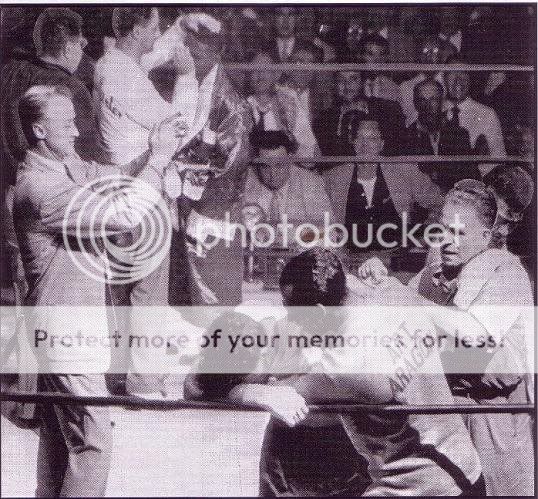
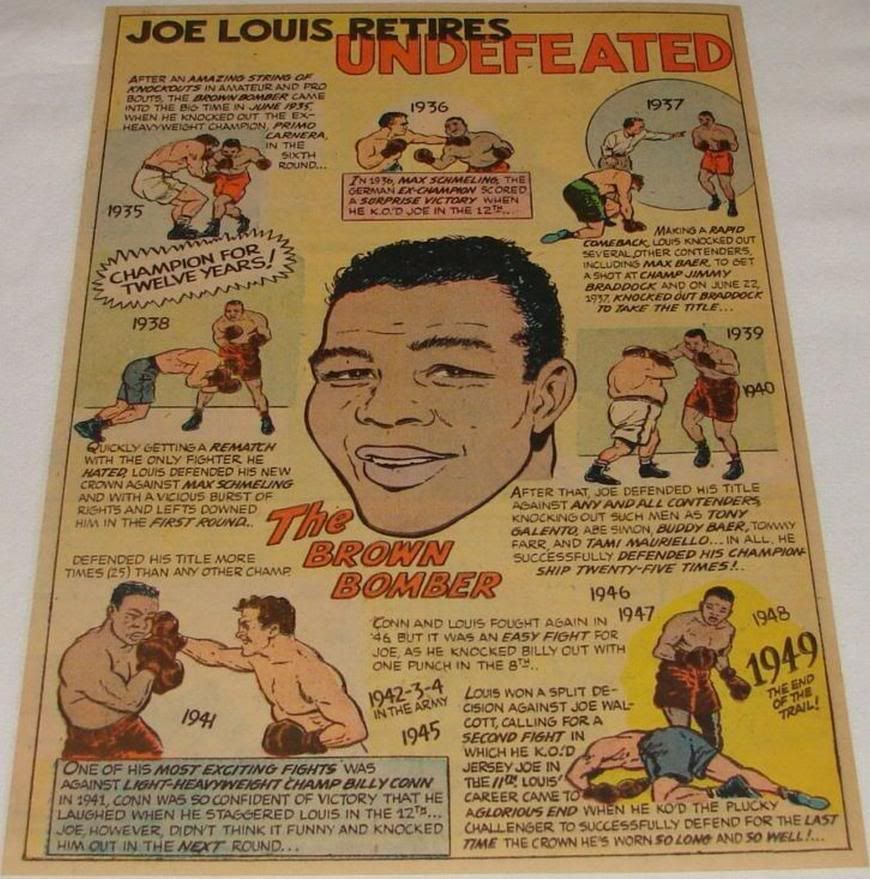
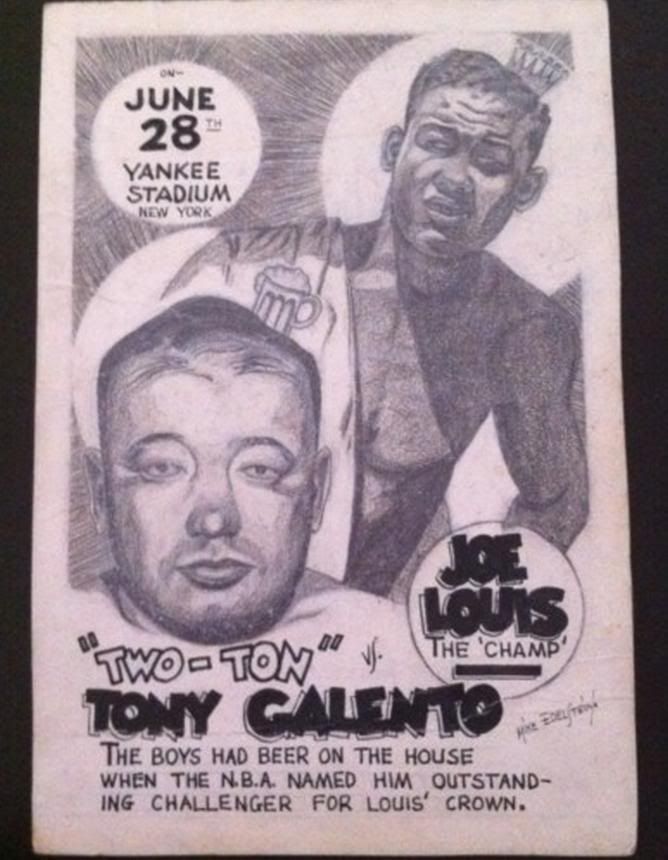
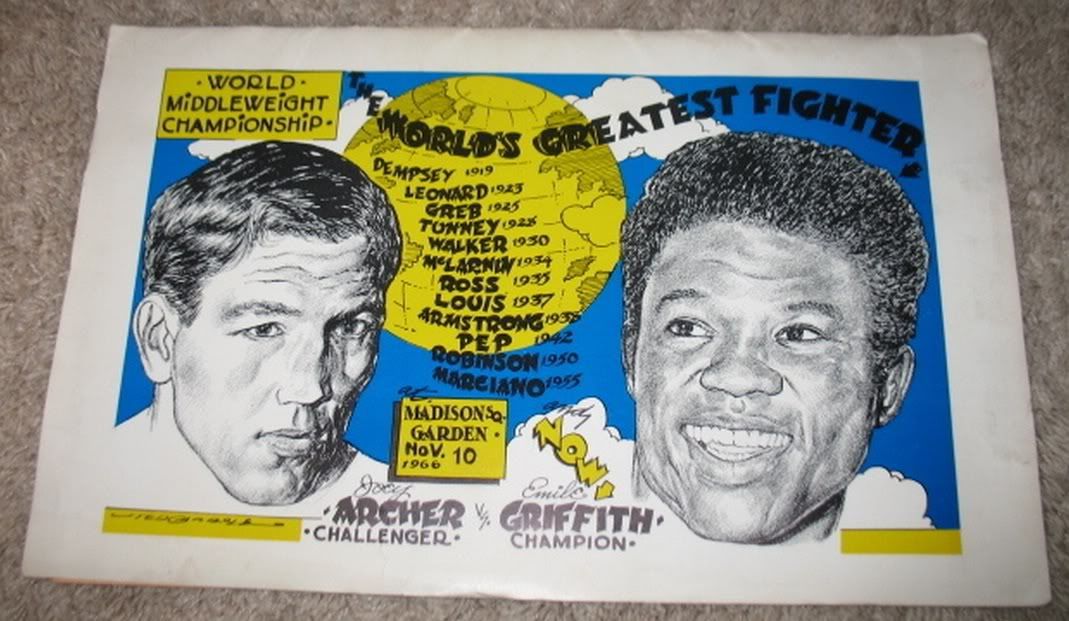
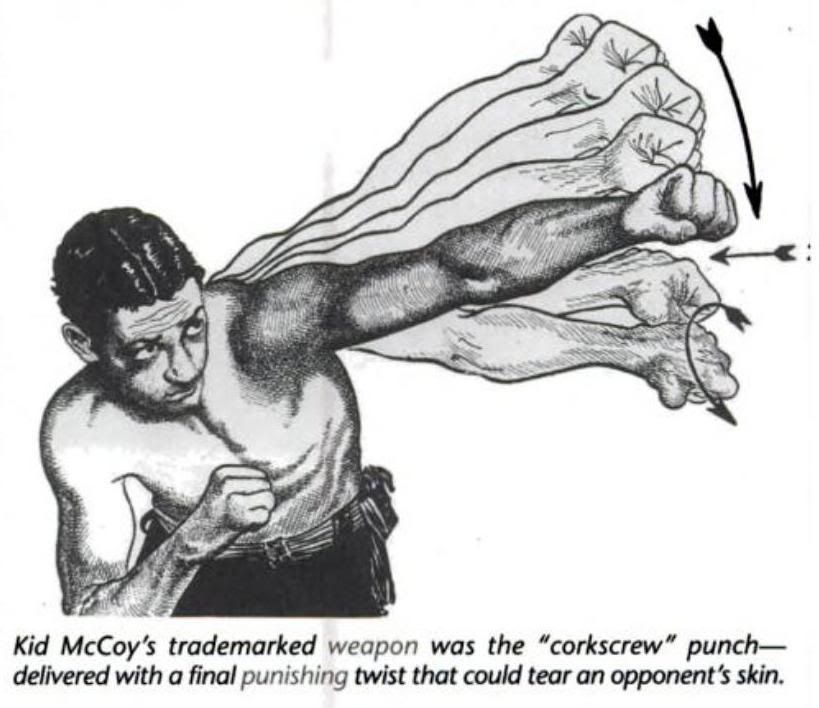
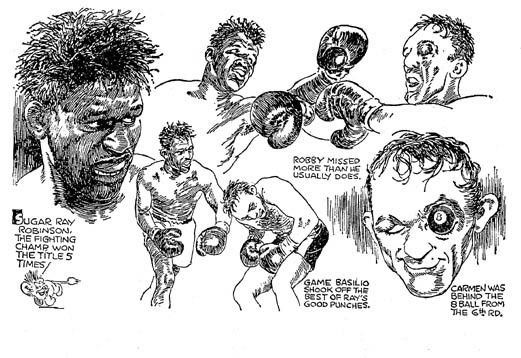
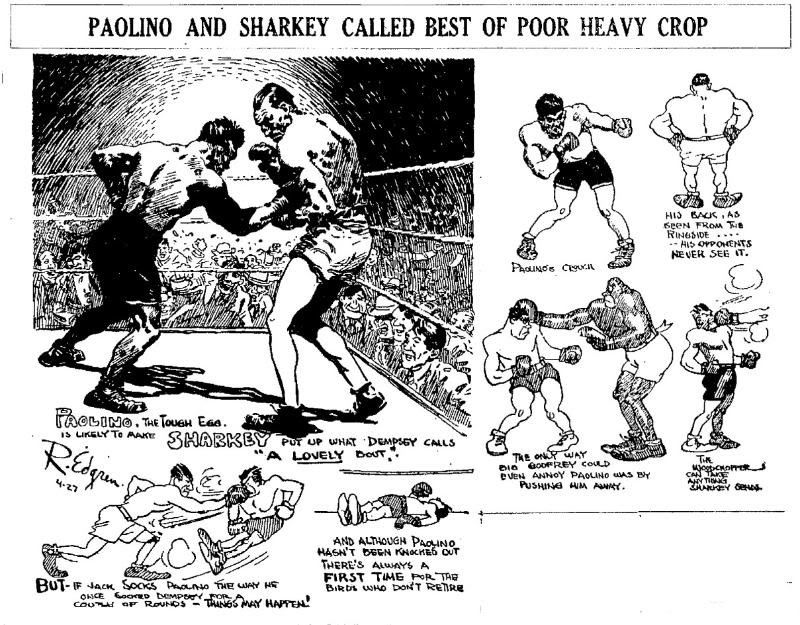
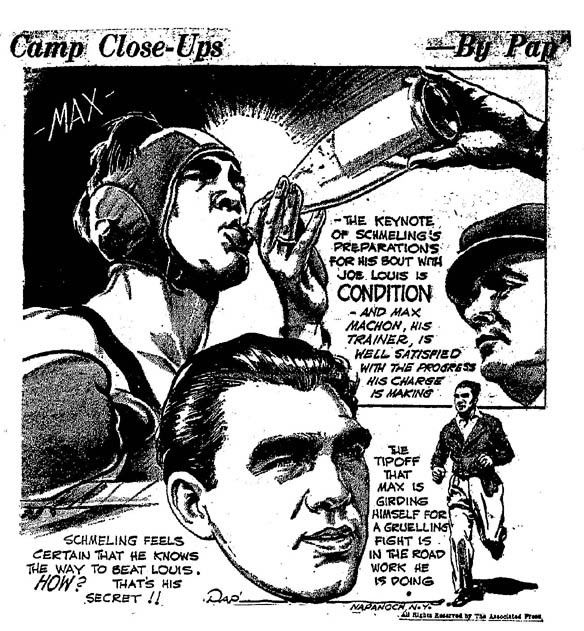
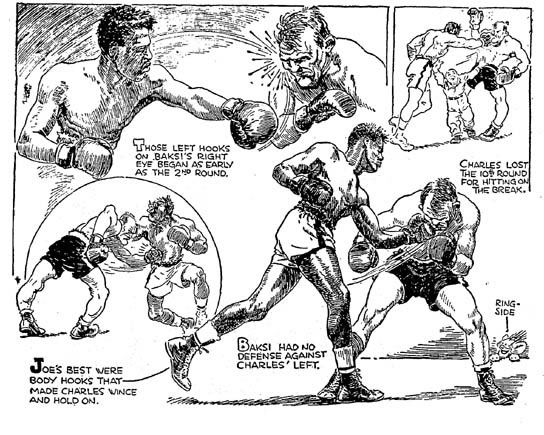
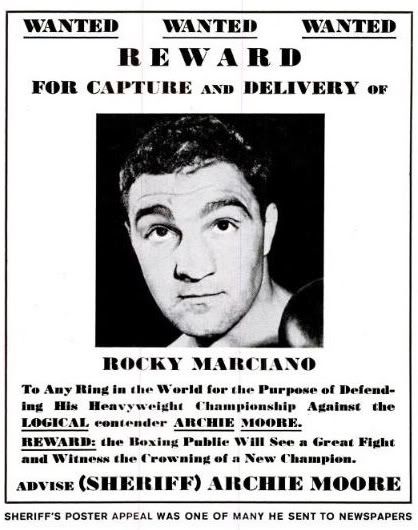
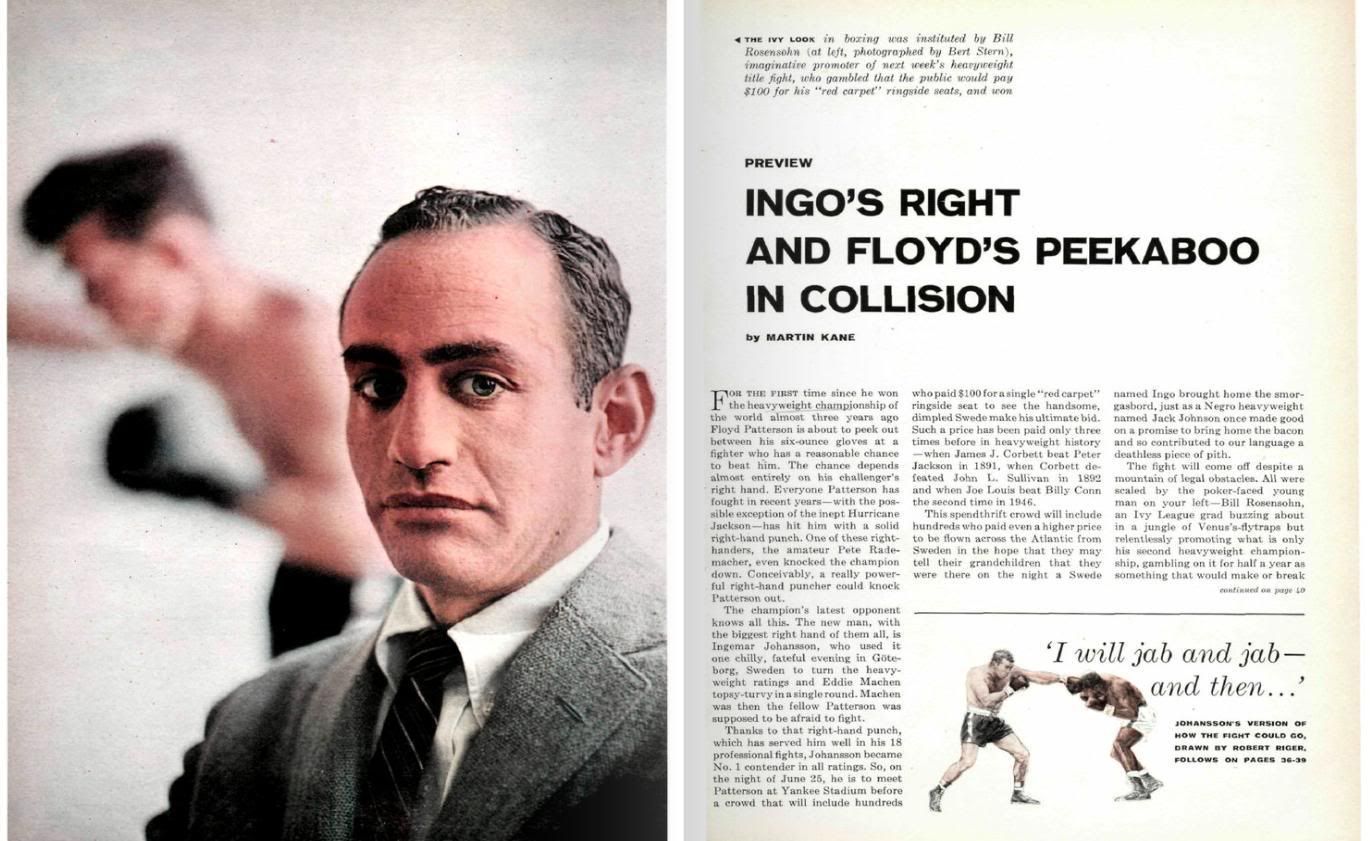
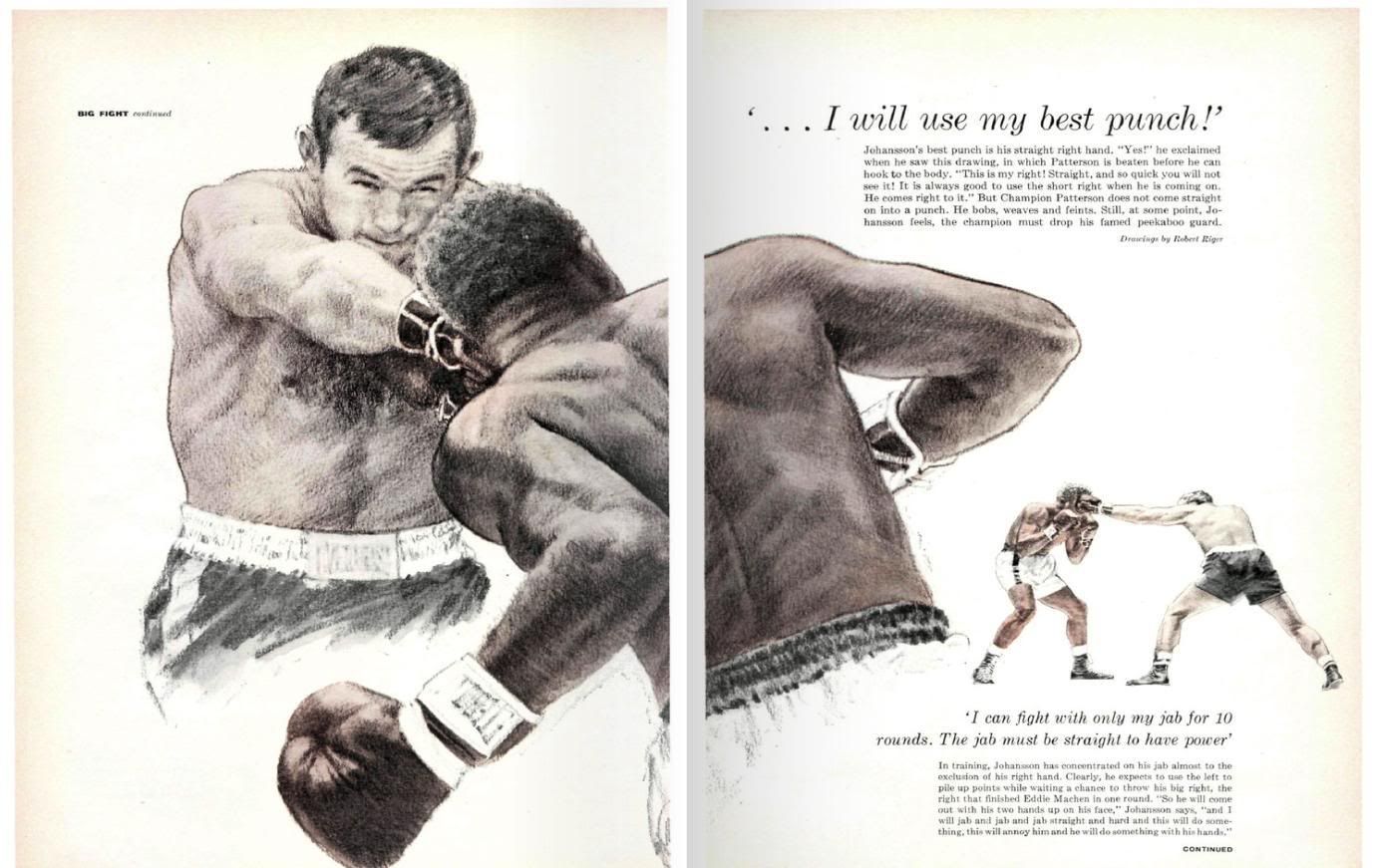
these (the images) are from Klompton's superb book on Harry Greb, which is one of the best boxing-related items i own...
................
Chuck Wiggins’ complete boxing record has never been fully documented, but he fought when ever, and where ever he could. Sometimes giving away weight, height, and experience, he did battle with anyone who dared lace on the gloves. Such well known names as Harry Greb, Gene Tunney, Jeff Smith, Tommy Gibbons, Johnny Risko, Tiger Flowers, Big George Godfrey, Tommy Loughran, Young Stribling, grace his list of opponents.
Probably the most frequently asked question was who was the greatest fighter Chuck ever faced. The answer was always Tunney, and Greb.
Well, he would be asked, “Which was the toughest?”
Chuck would toss a drink down, and shout, :[xx!*].. . I pick Greb. I fought the sucker nine times, and the only two times I win, I wasn’t in shape. I got two draws too, but he took the rest. That guy used to make me disgusted with the gloves. The worst beating in my career was given to me by that Dutchman Greb. He made me say “Uncle” twice in three days. The worst bouncing I got was in Kalamazoo. The night of the fight the boxing commissioner came to the dressing room and said, “Look here you fellows, this fight will not end on a foul, so don’t plan anything along that line. “Greb got me first, and hit me low. He bit me in the nose, and drew blood in the first clinch. Pretty soon he slipped, and as I was behind him, I gave him a kick in the pants, and he fell out on the floor. It was an alley fight all the way, but I had too many elbows for him that night, and got the decision.”
In September of 1927, Gene Tunney was preparing for his fight with Dempsey in Chicago. Chuck was his chief sparring partner, and also the highest paid. During one of the workouts Chuck opened a gash over Tunney’s eye, and was dismissed.
In later years Tunney was asked who was the gamest man he ever met. Tunney replied, “There were three men I met I can call really game. One was Harry Greb; another Bartley Madden; still another was Chuck Wiggins.
“I’ll tell you what I mean by real gameness. I fought Wiggins the first time just when I was getting started. For weeks I had been practicing the trick of slipping inside a right hand blow, and hooking my left to the body. It is not an easy thing to do, and I was green. In the first round I tried the punch, and the blow landed in foul territory. Not a word of complaint came from Chuck. Again in the second I tried it. Once more it landed low. This time the referee warned me.
“For several rounds I did not use the blow, but in the seventh I decided to try again. My aim and my timing were bad. The referee promptly stepped between us, and promised to disqualify me if it happened again. The blows were entirely unintentional on my part, of course they were low blows, Wiggins took them in silence without ever a thought of winning on a foul.
“Once again before the fight ended I tried, and once again my judgment was bad. The referee was at the point of giving Wiggins the award when Chuck himself interrupted, ‘Keep em up Gene’, he snapped, ‘ Those punches really are low’.
“That is a game man, couldn’t beat me at boxing, at least he was too much a fighter to seek a win on a foul.”
Despite the reputation as the dirtiest fighter to ever climb into a ring, Chuck was always kind, and generous to his friends. When in the money, Chuck would buy up a truckload of turkeys for the holidays, and distribute them to the underprivileged, both black, and white, in Indianapolis. Renting a big touring car one night he hired some black musicians, and rode around town with the band blaring “Hold That Tiger” his favorite song. Picking up some drinking buddies, the overcrowded automobile finally arrived at the burlesque, and Chuck gave a rather memorable performance to wind up the evening.
After years of rough campaigning, 1930 found Wiggins definitely over the hill, as far as boxing was concerned, and financially broke.
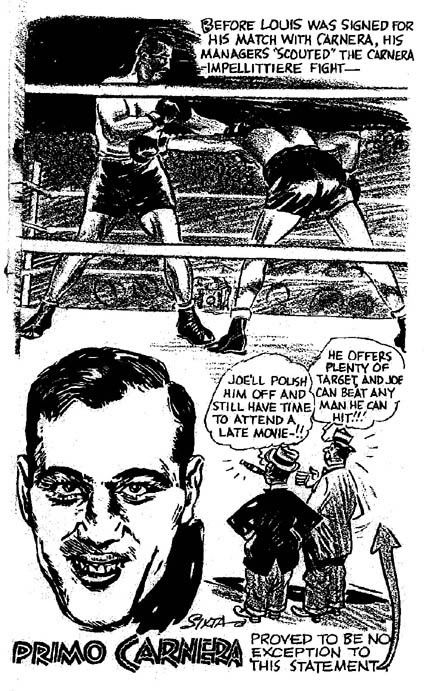
About this time a glandular freak from Sequals, Italy, was brought to the United States. Primo Carnera stood 6 feet 6 ¼ inches and weighed more than 250 pounds. Backed by the mob, the giant waded through a select group of has-beens, and never-will-be’s all instructed to make like a swan in a certain round.
Chuck was always good for news copy, so it was arranged for him to meet the “Ambling Alp” in St. Louis on March 17, 1930. Since “Ole Chucker” was unpredictable at the best, the syndicate guys gave him an advance of 500 dollars to take a spill. Chuck knew his days were long gone, so taking the money, he got good and drunk. As the fight approached, the mob started getting nervous, for fear Wiggins would cross them up, and “square off” on the prominent jaw of Carnera’s. Two muscle men were sent to see that Chuck had all the liquor he needed, and that he stayed stewed’ till the fight was over. The boys didn’t hide the fact that they were armed, and didn’t want Wiggins to get any ideas about knocking out their “investment.”
A group of young admirers from Indianapolis, and surrounding areas, went to St. Louis to wish the old “Hossier Playboy” luck. Not realizing their idol was throwing the fight, they knocked on his door at the hotel. The door opened, and Chuck, bleary eyed, stuck his head out. With youthful enthusiasm the boys surrounded the fighter with praise, and slaps on the back. Chuck’s face darkened, and he gruffly told the youngsters to get back home, and to make it snappy. With backward glances the kid’s went down the hall wondering what was wrong with “Chucker.” Back in his room Chuck sat down, and poured himself a drink. Man, wasn’t that great, those kids bumming their way here just to wish him luck. Maybe someday they would understand.
Almost 25,000 fans, the numbered believed to be a world’s record for attendance at an indoor fight show, jammed into the palatial arena to see the most talked about prize fighter meet the veteran brawler. About a minute into the second round Carnera half shoved, half pushed Chuck through the ropes. Reporters at ringside helped shove Wiggins back into the ring at the count of seven. Carnera again cuffed and mauled his smaller opponent around the ring, and again Chuck went through the ropes, struck a revolving chair, and sank down limply. The referee counted ten, and then helped Wiggins back into the ring.
After leaving the prize ring for good, Chuck lived at the Empire Hotel in Springfield, Illinois. Since the future looked pretty bleak, his drinking increased at an alarming rate.
One day around 1932 Chuck was drinking in the Empire Tap Room, when in strolled Tommy O’Brien, a good middleweight from the west coast. Tommy could bend his elbow with the best of them, and since Chuck was an old friend, the two sat down to do some serious drinking. After a number of drinks, O’Brien turned to Wiggins, “You Know Chuck, you are a great guy, and have done me a lot of favors, and I’ll always like ya, but I always figured you ain’t as rough as people say. Someday, I hope we get a chance to fight each other, cause I think I can whip your butt.”
Wiggins shrugged his shoulders, and said, “Bartender, give us another drink.” Then turning to Tommy O’Brien, “Lets finish this drink, and then go out in the alley, and get this out of your system. The loser comes back in, and buys the house a drink.”
Finishing their drinks, both walked back to an area in the alley. Wiggins takes off his thick glasses, and both take off their coats. “I’m ready when you are,” said Chuck. Punches started flying. Down goes O’Brien flat on his back. Wiggins extends his hand to Tommy and helps him up. “You slipped Tom, get up.”
O’Brien got up, and away they went again. A couple of minutes, and Tommy again hits the deck.
“You ready to buy that house drink, Tommy?” asked Chuck as he helped O’Brien to his feet. “I’m convinced,” replied Tommy.
They dusted themselves off; strolled back inside as if nothing happened, and stayed drunk together for the rest of the week.
By now divorced, Wiggins drifted back to his old haunts in Indianapolis, and took residence with his mother at 1716 Broadway.
It wasn’t long before he was again in the headlines. In 1934 Chuck was found lying in the street unconscious, after being slugged on the head with a shotgun. He was rushed to City Hospital with a fractured skull. While waiting treatment he regained consciousness, rose from the hospital cot, and walked out of the hospital.
A short time later he fainted at a filling station, and fell, striking his head on a concrete pump guard. Again he was taken to the hospital, where he recovered quickly.
Physicians said that the first skull fracture had caused a blood clot which probably would have been fatal, but when Wiggins fell against the concrete pump guard, the clot was relieved causing the injury to heal.
And Chuck’s skull had been fractured before… falls, clubs, and even gun barrels.
He once knocked out 15 policemen in a barroom brawl at Calumet City, Illinois, and another time fought 7 policemen, and 2 city fireman in the lobby of the Wesley Hotel, in Indianapolis.
In 1935 he fainted, and fell, striking his head against a curb in front of the Madison County Jail on South Alabama Street. He was in critical condition for a while.
An X-ray photograph taken at City Hospital on the occasion of his last serious injury showed the surface of his skull criss-crossed by tiny cracks from old injuries.
“It pays to have a bomb proof noggin,” Chuck said with a grin. “This bean can take a lot of thumpin yet.” And it did. Police blotters show frequent notations where Wiggins was arrested for assault, and battery, intoxication, and drunken driving.
Rumors started to drift around that “Ole Chucker” might take up professional wrestling. His reply, “Ha,Ha! Who, me? Now ain’t that something? Just because I go to the shows , and look the mugs over, I guess the fans think they’ll see me in there one of these nights shaking my fist at some flathead, and letting him snap off an arm. I’ll get in there with them when they put on the gloves, and from what I’ve seen lately it looks like they’ll soon be doing that. When they do, Mr. Wiggins is going to take a hand. I’m thinking about a comeback anyhow in the spring.”
In April 1937 he barged into the sports department of the Indianapolis Star, and announced that he was on the comeback trail. Wearing a huge moth eaten raccoon coat, and a battered derby he said he was to be known as the “Bearded Battler.” He wanted to meet John Henry Lewis.
“I’ll fight Lewis, and turn my part of the purse to the dog pound. People should always be kind to dogs, and not kick ‘em around too much. But if I can get that Light Heavyweight Champ in the ring, I’ll take him apart, or call it quits.” No one took him seriously.
With money gone, and sight failing, Chuck like many other declining ex-pugilist, took a job as a bouncer in a downtown tavern. A job responsible for one of the many stories told about him.
Wiggins’ employer told him to promptly eject any person who becomes too obnoxious, and Chuck performed creditably. One night, however, Chuck visited other taverns before going to work, so when his boss became a little boisterous, Wiggins promptly gave him the “heave-ho,” from his own place.
Big, flabby, and squint-eyed, with thick glasses, Chuck in his declining years had no resemblance to the man once described by Jack Dempsey, as the greatest street fighter in the world.
It was hard to believe that this man, bald, and a rubber tire waistline, had fought all the great ones of the 1920’s, had made well over a quarter of a million dollars, and was hailed coast-to-coast as one of the greatest Light Heavyweights ever. But it was true!
(by Robert Carson)