Eolaithe wrote: ↑30 Aug 2026, 14:56
Itauma started very well, throwing sharp combinations and mixing attacks to the head and body.
As expected, Itauma built an early lead. Hrgović, however, remained calm and patient.
He used his experience, knowing Itauma would be explosive early, and absorbed some thunderous punches without panicking or appearing seriously hurt.
There was a question over whether Itauma’s body shots might eventually slow him down, but Hrgović handled those well too. More importantly, while Itauma was constantly moving, feinting and exploding in and out of range, Hrgović conserved his energy.
Itauma sometimes tried to do the same by touching and fencing with his lead hand. The problem came whenever he wanted a break.
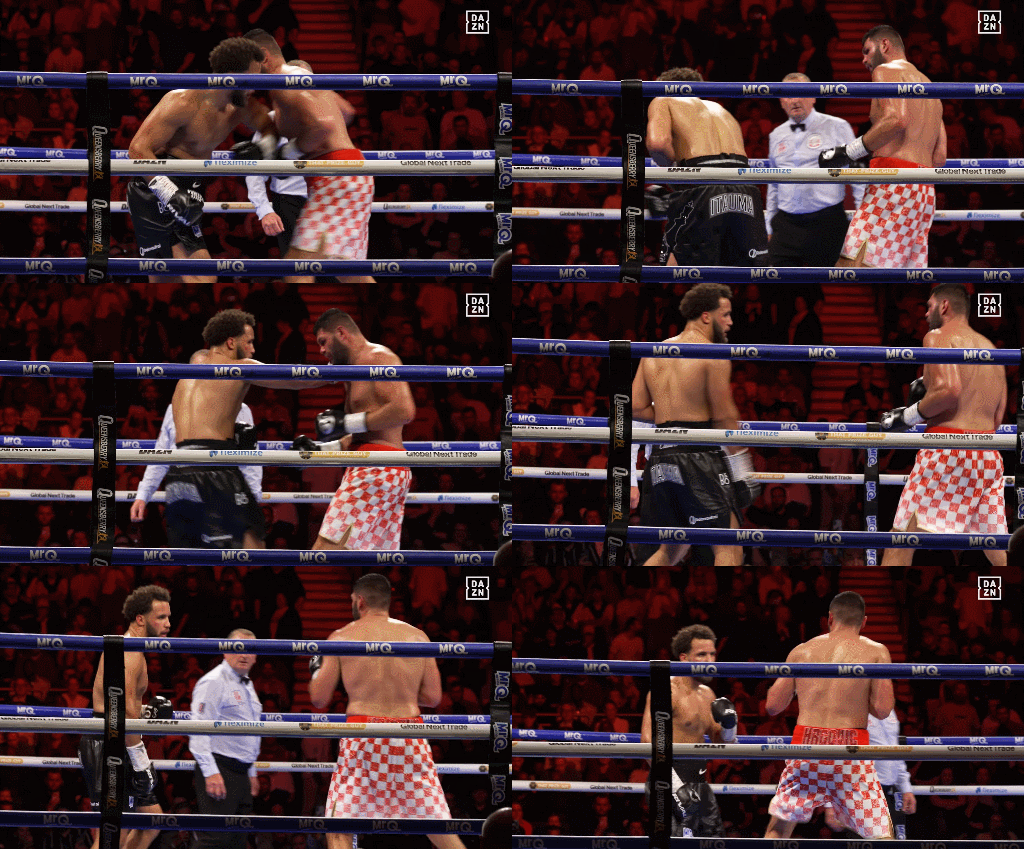
Hrgović would step forward and apply pressure. He did not even need to throw much. His presence alone appeared to make Itauma uncomfortable. Whenever Itauma slowed down, Hrgović advanced, often causing Itauma to respond with several hard punches simply to push him back.
Itauma had never really faced this before: an opponent who could absorb his best punches, remain calm and keep coming forward.
Inexperience was probably a major factor. Itauma had usually been the fighter imposing himself on opponents — the “bully” in the ring. Now somebody was refusing to back away and was instead walking towards him.
Itauma was still winning the rounds, but from around the third Hrgović increasingly applied this pressure. Itauma responded too aggressively and never allowed himself to rest properly.
If Itauma was not physically tiring himself by throwing powerful combinations, he was being mentally pressured by a big, strong heavyweight constantly advancing. He probably felt he could never completely relax.
Even the second-round knockdown did not affect Hrgović mentally. The experienced veteran simply got up and continued.
From the third round onwards, an important pattern developed: Itauma remained ahead and landed big punches, but Hrgović would not go away.
Eventually Itauma needed to ask himself: “What happens if this man cannot be knocked out?”
Does he accept that Hrgović may go 12 rounds, or continue trying to stop him?
That is where Itauma made his crucial strategic mistake.
In round eight, after appearing to hurt Hrgović with several big punches, Itauma launched another huge attack despite already running low on energy.
He had a choice: chase the knockout or recognise that Filip had survived everything so far and use those successful punches to earn Hrgović’s respect, slow the pace and recover.
Instead, Itauma went for the finish.
Chasing a knockout consumes enormous energy, particularly when you are already tired. By then, Itauma had landed tremendous punches throughout the fight without coming particularly close to stopping Hrgović.
He needed to accept: “This guy is probably going 12 rounds.”
Itauma was winning. His priority should therefore have changed from knocking Hrgović out to preserving enough energy to reach the final bell.
Even sacrificing one or two rounds would have been preferable to emptying his remaining tank.
Instead, Itauma threw everything into round eight and finished it exhausted.
Hrgović and his corner appeared to recognise this. Until then, Hrgović had been persistent but relatively cautious because he respected Itauma’s explosiveness. In round nine, that changed completely. Hrgović attacked.
The situation had now reversed. Itauma had spent his career bullying and overwhelming opponents; suddenly he was being pressured by a bigger, stronger and more experienced heavyweight.
Itauma was exhausted. Hrgović had more energy and far more experience of difficult fights. Hrgović knew how to navigate the situation; Itauma had never previously needed to.
Itauma’s inexperience showed again because he could have clinched more, held Hrgović, slowed the fight down and killed time.
Instead, even while exhausted, Itauma continued trying to throw huge punches. Without the energy to execute them properly, they became wide, wild and inaccurate.
But he needed to adapt. When your energy is disappearing, throw shorter, tighter punches. Stop putting maximum power into everything. Clinch when necessary, slow the pace and concentrate on surviving the rounds.
Itauma was still ahead on points at the time of the stoppage. Reaching the final bell might have been enough to win the world title.
Instead, continuing to throw huge clumsy punches exhausted him further and made it obvious that he was physically spent.
Had Itauma preserved more energy, he might still have struggled badly in the final rounds, but he would at least have given himself a better chance of reaching the final bell.
This may simply have been inexperience. Whether it also raises questions about his heart or character is impossible to know yet. Those questions can only be answered as his career develops.
But adversity reveals things about fighters that easy victories cannot. Before Hrgović, Itauma had almost always been in control. We had never really seen how he would react when a fight stopped going his way.
That does not mean he will fall apart whenever he faces adversity in the future. He may instead use this defeat as an important learning experience.