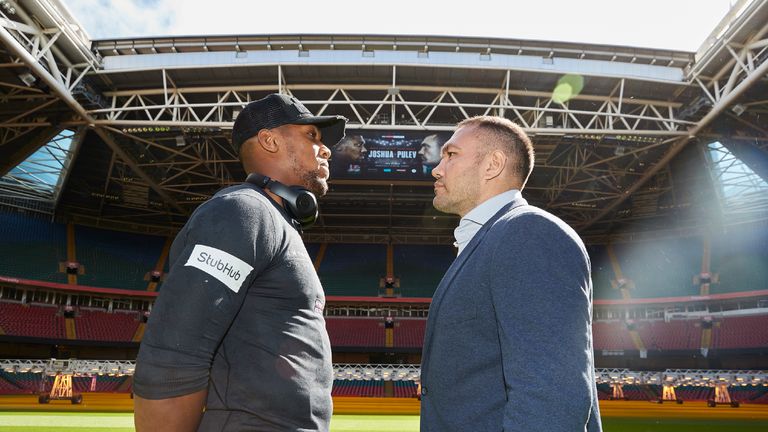
Since 2000, the number 1 heavyweight in the world has ALWAYS been someone taller than 6 foot 3 inches of height.
1) Lennox Lewis (6 foot 5)
2) Wladimir Klitschko (6 foot 6)
3) Vitali Klitschko (6 foot 7)
4) Anthony Joshua (6 foot 6)
5) Tyson Fury (6 foot 9)
Reach doesn't seem to play as much of a factor as height does when it comes to success for a heavyweight. But it does to some extent. Maybe you lot can offer a minimum reach to be a heavyweight?
The most accomplished heavyweight shorter than 6 foot 4 inches of height since the year 2000 has been Alexander Povetkin. The second best heavyweight shorter than 6 foot 4 inches of height has been David Haye.
Now, does anyone give any version of Alexander Povetkin any chance of beating Wladimir Klitschko, Lennox Lewis, Anthony Joshua or Tyson Fury at their best or even close to their best? Most would consider such matches as mismatches. Almost to the point where it seems like they aren't Creditable, respectable and worthy match ups.
The typical and most common responses to Alexander Povetkin vs Anthony Joshua, Deontay Wilder, Tyson Fury, Lennox Lewis or Klitschko would be:
- This is a mismatch.
- They would splatter him.
- Povetkin is too small to be much of a threat
- Povetkin is too small to be anything more than a minor nuisance.
- Povetkin isn't genetically built to be a successful heavyweight.
- He isn't getting near them.
- They destroy him from range.
- He is a cannon fodder.
Now if the best heavyweight of the last decade shorter than 6 foot 4 inches of height supposedly doesn't stand any chance or extremely small chances of winning against these top super heavyweights taller than 6 foot 4 inches. Then there isn't any heavyweight shorter than 6 foot 4 inches of height that would stand any greater chance of success against those taller boxers. And if that's the case, is there any point in having such heavyweight bouts between tall boxers who supposedly belong in their own height category and shorter boxers that fall under their own category?
If bouts like these are supposedly such mismatches. Then don't you think it's about time boxing considers introducing height divisions in the heavyweight division to separate short heavyweight boxers from tall heavyweight boxers?
If Povetkin at his best vs any of those top tall boxers I've mentioned are mismatches. Then there isn't a boxer out there that is shorter than 6 foot 4 that would be currently successful in the heavyweight division against such giants. And probably not ever!
So logical choice must be selected!
Should heavyweight boxing introduce height & reach divisions (minimum 6 foot 4 inches of height)?
-
Luis Fernando12
- Lightweight
- Posts: 435
- Joined: 21 Feb 2018, 07:38
Re: Should heavyweight boxing introduce height & reach divisions (minimum 6 foot 4 inches of height)?
theres been far too many guys under that height contending and winning belts for that to be justifiable. and your top 3 lewis and vitali and wlad all got stopped vs 'banned' guys and wilder had his knock down by one of them
btw all those guys were elite amateurs too, should we ban anyone who say, hasnt won a medal in the world amateur championships or olympics? this would ensure a high level throughout regardless of size
ironfrost taking a more round about route to his povetkin trolling this time, but still getting there eventually. guy shouldnt even be fighting because hes so overmatched! ban him for his own good!
btw all those guys were elite amateurs too, should we ban anyone who say, hasnt won a medal in the world amateur championships or olympics? this would ensure a high level throughout regardless of size
ironfrost taking a more round about route to his povetkin trolling this time, but still getting there eventually. guy shouldnt even be fighting because hes so overmatched! ban him for his own good!
Re: Should heavyweight boxing introduce height & reach divisions (minimum 6 foot 4 inches of height)?
WTF? Height and reach?
Mike Tyson's dominance as a short heavy in his prime ruins silly theorys like this.
Mike Tyson's dominance as a short heavy in his prime ruins silly theorys like this.
-
punchoutsb
- Heavyweight

- Posts: 5842
- Joined: 16 Sep 2009, 01:05
Re: Should heavyweight boxing introduce height & reach divisions (minimum 6 foot 4 inches of height)?
What a truly terrible idea.
-
asdfjkl
- Heavyweight
Re: Should heavyweight boxing introduce height & reach divisions (minimum 6 foot 4 inches of height)?
The best active heavyweight of this century is Povetkin...
Re: Should heavyweight boxing introduce height & reach divisions (minimum 6 foot 4 inches of height)?
Chris Byrd made Vitali quit.
Lamont Brewster owned Wladimir.
Haseem Rahman destroyed Lennox.
Anthony Joshua was savaged by Mihai Nistor.
Tyson Fury was out on his feet against blown-up middleweight Steve USSSS Cunningham.
Lamont Brewster owned Wladimir.
Haseem Rahman destroyed Lennox.
Anthony Joshua was savaged by Mihai Nistor.
Tyson Fury was out on his feet against blown-up middleweight Steve USSSS Cunningham.
Re: Should heavyweight boxing introduce height & reach divisions (minimum 6 foot 4 inches of height)?
We definitely don't need another division. Terrible idea 
Most of the smaller fighters actually belong in cruiser but for some weird reason nobody is interested in that weight class. Big guys with good skills. Would be the best division if the fighters just stayed there. But it seems people want the freak show at HW instead. Valuev is the value for some strange reason.
Povetkin could easily make the cruiser limit. He was 223 for the Hammer fight. Guys in lower divisions cut almost that much weight regularly.
On a side note.... Reach is big advantage in boxing. Many of the old greats had really long arms.
Lets throw Vitali here as example of the modern boxer.
Height 201 cm (6'7'' For those of you still stuck on stone age)
Reach 201 (79'')
Some of the older ones.
Lewis
196 (6'5'')
213 (84'')
Foreman
192 (6'3 1/2'')
199 (78 1/2'')
Ali
191 (6'3'')
198 (78'')
Liston
185 (6'1'')
213 (84'')
Holmes
190 (6'3'')
206 (81'')
Shavers
183 (6'0'')
201 (79'')
Most of the smaller fighters actually belong in cruiser but for some weird reason nobody is interested in that weight class. Big guys with good skills. Would be the best division if the fighters just stayed there. But it seems people want the freak show at HW instead. Valuev is the value for some strange reason.
Povetkin could easily make the cruiser limit. He was 223 for the Hammer fight. Guys in lower divisions cut almost that much weight regularly.
On a side note.... Reach is big advantage in boxing. Many of the old greats had really long arms.
Lets throw Vitali here as example of the modern boxer.
Height 201 cm (6'7'' For those of you still stuck on stone age)
Reach 201 (79'')
Some of the older ones.
Lewis
196 (6'5'')
213 (84'')
Foreman
192 (6'3 1/2'')
199 (78 1/2'')
Ali
191 (6'3'')
198 (78'')
Liston
185 (6'1'')
213 (84'')
Holmes
190 (6'3'')
206 (81'')
Shavers
183 (6'0'')
201 (79'')

Re: Should heavyweight boxing introduce height & reach divisions (minimum 6 foot 4 inches of height)?
Absolutely not! Fighters like Dempsey, Marciano, Frazier, Tyson (85-89 version), Tua, etc were able to dominate the heavyweight division or at least be very competitive in their eras. Dempsey was average height and only included because of the height disparity with Willard, but the others were short for their division.
If there is a case for giving a leg up to the natural 15 stone heavyweight, and many would argue against it, then introduce a new super-cruiserweight division. As I said on a previous thread about that, it would start out as the red-headed bastard step-child, as a new division always does, but look at cruiserweight thirty years after inception - who would be in favour of abolishing that now? None but an idiot.
If there is a case for giving a leg up to the natural 15 stone heavyweight, and many would argue against it, then introduce a new super-cruiserweight division. As I said on a previous thread about that, it would start out as the red-headed bastard step-child, as a new division always does, but look at cruiserweight thirty years after inception - who would be in favour of abolishing that now? None but an idiot.
Re: Should heavyweight boxing introduce height & reach divisions (minimum 6 foot 4 inches of height)?
Lol there are many many skilled short heavyweights. If you wanna add some limitations, it should be % of fat. Im tired of all these fatties who can cut to middleweight, calling themselves professional athletes. Heavyweight division is full of these. :( :( :(
Re: Should heavyweight boxing introduce height & reach divisions (minimum 6 foot 4 inches of height)?
All except Dempsey also had short reach. Marciano for example had the relative arm length of t-Rexcandyslim wrote: ↑28 Feb 2018, 04:12 Absolutely not! Fighters like Dempsey, Marciano, Frazier, Tyson (85-89 version), Tua, etc were able to dominate the heavyweight division or at least be very competitive in their eras. Dempsey was average height and only included because of the height disparity with Willard, but the others were short for their division.

Re: Should heavyweight boxing introduce height & reach divisions (minimum 6 foot 4 inches of height)?
Yeah and that's not all he had in common with T-Rex. I think they had quite a similar attitude to their prey 
-
Enlightened-One
- Welterweight
- Posts: 14618
- Joined: 19 Jul 2016, 05:12
Re: Should heavyweight boxing introduce height & reach divisions (minimum 6 foot 4 inches of height)?
All five of your examples are clearly exceptions to the general rule, with one of those upsets due to injury, rather than adhering to your “David versus Goliath” theory, with another simply being a lucky one-punch knockout and with one of the other fights clearly being a stoppage as a result of fatigue.
There’s a reason why weight divisions exist and it’s no coincidence that the most dominant heavyweights since the mid-nineties have been around or bigger than the 6’ 5” 240lbs mark.
-
Enlightened-One
- Welterweight
- Posts: 14618
- Joined: 19 Jul 2016, 05:12
Re: Should heavyweight boxing introduce height & reach divisions (minimum 6 foot 4 inches of height)?
I find the topic of this discussion around the size of modern day heavyweight fighters quite intriguing, but I feel that weight also has to be considered, with height and reach being less significant factors, due to the following reasons…
Based on BoxRec’s top 60 rankings from February of last year, the average weight of a heavyweight fighter was 247lbs, with 42% of the boxers listed being taller than 6’ 4” in height.
The average height of the top-30 tallest boxers was 6’ 5” (77”), with the average for the bottom half being 6’ 3” (75”).
The average weight of a top-30 heaviest boxer was 257.5lbs, with the average for the bottom half of modern day heavyweights being 236.5lbs.
To put these numbers into context, every single one of the top sixty fighters rated by BoxRec during February 2017 weighed far more than Larry Holmes' average 207½lb physical prime weight, with the vast majority being taller also.
Around the same date these stats were formulated, the most dominant technically-active fighters of the heavyweight division included the likes of:
• Tyson Fury = 265lbs; 6' 9"
• Wladimir Klitschko = 245lbs; 6' 6"
• Deontay Wilder = 228lbs; 6' 7"
• Kubrat Pulev = 253lbs; 6' 4.5"
• Luis Ortiz = 241lbs; 6' 4"
• Anthony Joshua = 249lbs; 6' 6"
• Joseph Parker = 246lbs; 6' 4"
If you’re currently a 6’ 3” (or shorter) highly-athletic heavyweight that naturally walks around somewhere around the 225lbs mark, then you’re in “no man’s land”, because you’ll be far too big for the cruiserweight division, but also having to endure a significant size disadvantage against some of your heavyweight peers.
Based on BoxRec’s top 60 rankings from February of last year, the average weight of a heavyweight fighter was 247lbs, with 42% of the boxers listed being taller than 6’ 4” in height.
The average height of the top-30 tallest boxers was 6’ 5” (77”), with the average for the bottom half being 6’ 3” (75”).
The average weight of a top-30 heaviest boxer was 257.5lbs, with the average for the bottom half of modern day heavyweights being 236.5lbs.
To put these numbers into context, every single one of the top sixty fighters rated by BoxRec during February 2017 weighed far more than Larry Holmes' average 207½lb physical prime weight, with the vast majority being taller also.
Around the same date these stats were formulated, the most dominant technically-active fighters of the heavyweight division included the likes of:
• Tyson Fury = 265lbs; 6' 9"
• Wladimir Klitschko = 245lbs; 6' 6"
• Deontay Wilder = 228lbs; 6' 7"
• Kubrat Pulev = 253lbs; 6' 4.5"
• Luis Ortiz = 241lbs; 6' 4"
• Anthony Joshua = 249lbs; 6' 6"
• Joseph Parker = 246lbs; 6' 4"
If you’re currently a 6’ 3” (or shorter) highly-athletic heavyweight that naturally walks around somewhere around the 225lbs mark, then you’re in “no man’s land”, because you’ll be far too big for the cruiserweight division, but also having to endure a significant size disadvantage against some of your heavyweight peers.
Last edited by Enlightened-One on 28 Feb 2018, 05:28, edited 3 times in total.
Re: Should heavyweight boxing introduce height & reach divisions (minimum 6 foot 4 inches of height)?
I am having hard time making anything out of this statistics... Are you talking about the top-30 boxers according to boxrec ratings? If so then what do you mean with the words "tallest" and "heaviest" in those sentences? Or did you take the heaviest and tallest of the HW division and make the statistics about them?Enlightened-One wrote: ↑28 Feb 2018, 05:22 The average height of the top-30 tallest boxers was 6’ 5” (77”), with the average for the bottom half being 6’ 3” (75”).
The average weight of a top-30 heaviest boxer was 257.5lbs, with the average for the bottom half of modern day heavyweights being 236.5lbs.
Also what does the average for the bottom half of modern day heavyweights being at certain weight mean? And why is it relevant to the conversation at hand?
There is weird trend of throwing totally random statistics around now days...
I never realized that Pulev is actually that heavy. He moves well for guy of hes weight. Makes the lack of power even more weird.
-
Enlightened-One
- Welterweight
- Posts: 14618
- Joined: 19 Jul 2016, 05:12
Re: Should heavyweight boxing introduce height & reach divisions (minimum 6 foot 4 inches of height)?
I think there’s an argument for the creation of a weight division between heavyweight and cruiserweight, given the disparity in size of the fighters involved in both weight classes, coupled with the typical rankings of a fighter considered a “small” heavyweight by modern-day standards.Heretic wrote: ↑28 Feb 2018, 06:04I am having hard time making anything out of this statistics... Are you talking about the top-30 boxers according to boxrec ratings? If so then what do you mean with the words "tallest" and "heaviest" in those sentences? Or did you take the heaviest and tallest of the HW division and make the statistics about them?Enlightened-One wrote: ↑28 Feb 2018, 05:22 The average height of the top-30 tallest boxers was 6’ 5” (77”), with the average for the bottom half being 6’ 3” (75”).
The average weight of a top-30 heaviest boxer was 257.5lbs, with the average for the bottom half of modern day heavyweights being 236.5lbs.
Also what does the average for the bottom half of modern day heavyweights being at certain weight mean? And why is it relevant to the conversation at hand?
There is weird trend of throwing totally random statistics around now days...
So I quoted the average heights & weights of the top sixty fighters, as well as averages for the top-30 tallest, bottom-30 shortest, top-30 heaviest and the bottom-30 lightest.
It’s up to you to disregard any stats that you personally believe to be relevant.
That being said, it is surely no coincidence that most of the highest ranked boxers competing in the division at the time these stats were gathered, when weight and height are being measured, would be included in both the heaviest and tallest fighters this weight class has to offer, which is the reason why I specifically listed seven names in my previous explanation.
I simply wanted to justify my theory why “size” really does matter.
This is only his average. He can be a few pounds lighter or heavier on a given day, but he’s a really big unit regardless. He was 256lbs for his most recent outing.
Last edited by Enlightened-One on 28 Feb 2018, 06:28, edited 1 time in total.
Re: Should heavyweight boxing introduce height & reach divisions (minimum 6 foot 4 inches of height)?
Pulev is 6’4”!? Doesn’t look like it when he’s stood next to people.
-
Enlightened-One
- Welterweight
- Posts: 14618
- Joined: 19 Jul 2016, 05:12


Re: Should heavyweight boxing introduce height & reach divisions (minimum 6 foot 4 inches of height)?
The small heavies are just lazy cruisers that cant be arsed making weight like everybody else has to, would rather see them out of the game than start inventing new weight divisions for the fat, indiciplined feckersEnlightened-One wrote: ↑28 Feb 2018, 06:17I think there’s an argument for the creation of a weight division between heavyweight and cruiserweight, given the disparity in size of the fighters involved in both weight classes, coupled with the typical rankings of a fighter considered a “small” heavyweight by modern-day standards.Heretic wrote: ↑28 Feb 2018, 06:04I am having hard time making anything out of this statistics... Are you talking about the top-30 boxers according to boxrec ratings? If so then what do you mean with the words "tallest" and "heaviest" in those sentences? Or did you take the heaviest and tallest of the HW division and make the statistics about them?Enlightened-One wrote: ↑28 Feb 2018, 05:22 The average height of the top-30 tallest boxers was 6’ 5” (77”), with the average for the bottom half being 6’ 3” (75”).
The average weight of a top-30 heaviest boxer was 257.5lbs, with the average for the bottom half of modern day heavyweights being 236.5lbs.
Also what does the average for the bottom half of modern day heavyweights being at certain weight mean? And why is it relevant to the conversation at hand?
There is weird trend of throwing totally random statistics around now days...
So I quoted the average heights & weights of the top sixty fighters, as well as averages for the top-30 tallest, bottom-30 shortest, top-30 heaviest and the bottom-30 lightest.
It’s up to you to disregard any stats that you personally believe to be relevant.
That being said, it is surely no coincidence that most of the highest ranked boxers competing in the division at the time these stats were gathered, when weight and height are being measured, would be included in both the heaviest and tallest fighters this weight class has to offer, which is the reason why I specifically listed seven names in my previous explanation.
I simply wanted to justify my theory why “size” really does matter.This is only his average. He can be a few pounds lighter or heavier on a given day, but he’s a really big unit regardless. He was 256lbs for his most recent outing.
Re: Should heavyweight boxing introduce height & reach divisions (minimum 6 foot 4 inches of height)?
Ok this is starting to make more sense. So you are talking about the shortest and lightest half of the top 60 boxrec HW at the time.Enlightened-One wrote: ↑28 Feb 2018, 06:17I think there’s an argument for the creation of a weight division between heavyweight and cruiserweight, given the disparity in size of the fighters involved in both weight classes, coupled with the typical rankings of a fighter considered a “small” heavyweight by modern-day standards.Heretic wrote: ↑28 Feb 2018, 06:04I am having hard time making anything out of this statistics... Are you talking about the top-30 boxers according to boxrec ratings? If so then what do you mean with the words "tallest" and "heaviest" in those sentences? Or did you take the heaviest and tallest of the HW division and make the statistics about them?Enlightened-One wrote: ↑28 Feb 2018, 05:22 The average height of the top-30 tallest boxers was 6’ 5” (77”), with the average for the bottom half being 6’ 3” (75”).
The average weight of a top-30 heaviest boxer was 257.5lbs, with the average for the bottom half of modern day heavyweights being 236.5lbs.
Also what does the average for the bottom half of modern day heavyweights being at certain weight mean? And why is it relevant to the conversation at hand?
There is weird trend of throwing totally random statistics around now days...
So I quoted the average heights & weights of the top sixty fighters, as well as averages for the top-30 tallest, bottom-30 shortest, top-30 heaviest and the bottom-30 lightest.
It’s up to you to disregard any stats that you personally believe to be relevant.
That being said, it is surely no coincidence that most of the highest ranked boxers competing in the division at the time these stats were gathered, when weight and height are being measured, would be included in both the heaviest and tallest fighters this weight class has to offer, which is the reason why I specifically listed seven names in my previous explanation.
Still taking average of the shorter or lighter half of top 60 boxers is bit random. Kind of hard to understand what are the implications of the average when you don't really understand what is being averaged in the first place

The simple average of the top 60 hw boxers was easy to understand and made the point clear...
I agree with the size really matters theoryEnlightened-One wrote: ↑28 Feb 2018, 06:17 I simply wanted to justify my theory why “size” really does matter.

He was bit lighter in the Wlad fight. Still he was the heavier man in the ring that night which surprised me a bit. I always thought he was smaller than he is.Enlightened-One wrote: ↑28 Feb 2018, 06:17This is only his average. He can be a few pounds lighter or heavier on a given day, but he’s a really big unit regardless. He was 256lbs for his most recent outing.
Re: Should heavyweight boxing introduce height & reach divisions (minimum 6 foot 4 inches of height)?
I think the problem with height is more of a recent one. A common point made is that a lot of old heavies would be too short in this era so using them as an example isn't the whole story. I think the OPs post is valid but no! I do not want another division.
Re: Should heavyweight boxing introduce height & reach divisions (minimum 6 foot 4 inches of height)?
No. Go back to Cruiserweight if you can't hang up there.